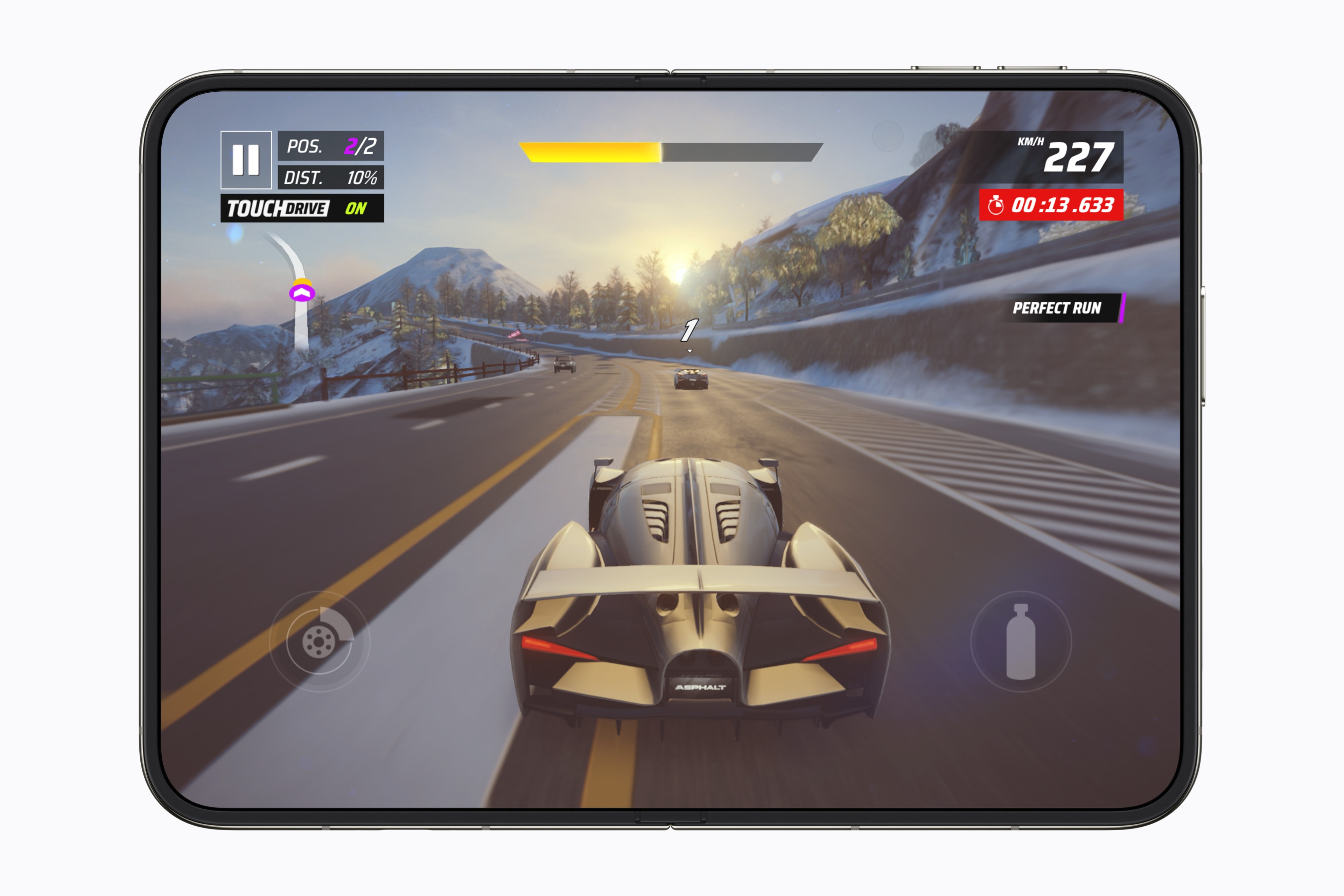
On a foldable phone, the display is the product. Apple knows it, and the iPhone Duo's screen specifications read like the most ambitious display Apple has shipped on any iPhone: a 7.6-inch folding OLED with a nano-texture finish, 3000-nit peak brightness, 120Hz ProMotion on both screens, and an under-display FaceTime camera. This guide translates each of Apple's display claims into plain language, using only what Apple has confirmed on its product page, specs page, and Newsroom announcement.
The takeaway: the Duo's screen tech is the most advanced Apple has shipped, and the crease story is an engineering story about layers, adhesives, and stress management.
Key takeaways
- Inner display: 7.6-inch Super Retina XDR folding OLED, 1878x2670 at 430 ppi, with nano-texture finish (Apple-confirmed).
- Outer display: 5.4-inch Super Retina XDR OLED, 1398x2034 at 460 ppi (Apple-confirmed).
- Brightness: 1000 nits typical, 1600 nits HDR peak, 3000 nits outdoor peak on both displays.
- Both displays run ProMotion up to 120Hz; both support Always-On and Dynamic Island.
- Apple says the crease is minimized through layer engineering, not eliminated. No independent testing exists yet.
- The $1,999 starting price (256GB) buys this display stack; pre-orders open October 16.
The two displays, by the numbers
Apple's specs page lists both panels as Super Retina XDR OLEDs:
| Inner display | Outer display | |
|---|---|---|
| Size | 7.6 inches (folding) | 5.4 inches |
| Resolution | 1878x2670 at 430 ppi | 1398x2034 at 460 ppi |
| Finish | Nano-texture | Standard |
| ProMotion | Up to 120Hz | Up to 120Hz |
| Brightness | 1000 / 1600 / 3000 nits | 1000 / 1600 / 3000 nits |
| Extras | Under-display FaceTime camera | Dynamic Island, Always-On |
Both panels carry the same brightness ratings and refresh rate, which matters: the outer screen is not a cut-down companion panel. For the full hardware picture beyond the displays, see Apple's confirmed specs.
Nano-texture: what it actually means
Nano-texture is a surface treatment etched at a microscopic scale. In plain terms, it scatters incoming light instead of reflecting it straight back at your eyes, which cuts glare and mirror-like reflections. Apple previously offered nano-texture on the Pro Display XDR and high-end iPads; the Duo is the first iPhone to get it, and only on the inner folding display.
The practical effect Apple claims: the big screen stays readable in bright rooms and sunlight without cranking brightness to maximum. One trade-off worth knowing from Apple's own description: nano-texture is a matte-like finish, so it slightly softens the absolute crispness purists associate with glossy glass. Apple clearly decided glare reduction was the better bargain on a tablet-sized screen.
3000 nits, decoded
Apple lists three brightness figures, and they measure different things:
- 1000 nits typical: everyday brightness for normal content. This is the number that describes daily use.
- 1600 nits HDR peak: the maximum for HDR video highlights, like sun glints in a movie scene. It applies to small bright areas, not the whole screen.
- 3000 nits outdoor peak: the maximum the display can hit in direct sunlight so the screen stays readable. This is the headline number and the one that matters outdoors.
For context, 3000 nits puts the Duo among the brightest phone displays Apple has ever rated. Apple does not publish sustained full-screen brightness figures, so treat the 3000-nit number as a peak capability, not an all-day one.
ProMotion 120Hz on both screens
Both displays refresh at up to 120Hz with ProMotion, Apple's adaptive refresh technology. In practice this means scrolling, animations, and Apple Pencil-style interactions look smooth, while the display can drop to low refresh rates for static content to save battery. Having 120Hz on the outer screen too means there is no jarring step down when you close the phone and keep using it one-handed.
The under-display FaceTime camera
The inner display hides its FaceTime camera beneath the panel, so nothing interrupts the viewing surface: no notch, no punch hole, no Dynamic Island on the big screen. Apple says the camera stays hidden until needed. Under-display cameras historically trade some image quality for invisibility, and Apple has published no sample output yet, so buyers should expect the outer display's conventional camera to remain the better selfie option until proven otherwise.
The crease: an engineering story
The fold is the defining engineering problem of every foldable, and Apple's Q&A addresses it directly. Paraphrased, Apple's account runs like this: the inner display is built from more than 10 ultrathin layers, and optically clear adhesives between those layers let them glide slightly as the screen folds. That gliding relieves the stress that would otherwise concentrate at the fold line, which is what minimizes the crease.
This is a meaningful design choice. A rigid stack would fight the fold and crease sharply; a stack whose layers can shift distributes the bending force. Combined with the nano-texture finish, which also helps visually by breaking up reflections at the fold, the result is what early hands-on coverage has described as the least visible crease on a foldable so far. Our hands-on crease verdict rounds up what reviewers actually saw.
But Apple's wording is precise and buyers should respect it: the crease is minimized, not eliminated, not invisible. Apple has never claimed the fold disappears, and no independent lab has measured crease depth or long-term crease development on retail units. Anyone telling you the crease is gone is going beyond what Apple said.
What Apple does not claim
- No zero-crease claim. Apple's word is minimized.
- No independent brightness or crease test results exist yet; every figure here is Apple's rating.
- No durability figure for the folding mechanism beyond the layer and adhesive engineering Apple describes.
Frequently asked questions
What is the nano-texture finish on the iPhone Duo display?
Apple's nano-texture finish is a surface treatment on the inner display that reduces glare and reflections, making the screen easier to read in bright light.
How bright is the iPhone Duo display?
Apple rates both Duo displays at 1000 nits typical brightness, 1600 nits peak for HDR content, and 3000 nits peak for outdoor use.
Does the iPhone Duo have a visible crease?
Apple says the crease is minimized, not eliminated. Optically clear adhesives let the display layers glide as the screen folds, reducing stress at the fold. No independent crease testing exists yet.
Do both iPhone Duo displays support 120Hz?
Yes. Apple confirms ProMotion up to 120Hz on both the 7.6-inch inner display and the 5.4-inch outer display.
Where is the FaceTime camera on the iPhone Duo inner display?
Apple built the FaceTime camera under the inner display, so it stays hidden until needed and the viewing surface is uninterrupted.
Sources
- Apple, iPhone Duo: Expansive display section (nano-texture, 3000 nits, wide-angle OLEDs, under-display FaceTime camera; display and crease Q&A).
- Apple, iPhone Duo technical specifications: inner and outer display sizes, resolutions, brightness ratings, ProMotion, Dynamic Island, Always-On.
- Apple Newsroom, "Apple unveils iPhone Duo," September 2026: launch context.